




August 3, 2026
by David Bradley, Inderscience
edited by Lisa Lock, reviewed by Alexander Pol
Scientific Editor
Deputy Editor
This article has been reviewed according to Science X's editorial process and policies. Editors have highlighted the following attributes while ensuring the content's credibility:
fact-checked
trusted source
proofread
Add as preferred source
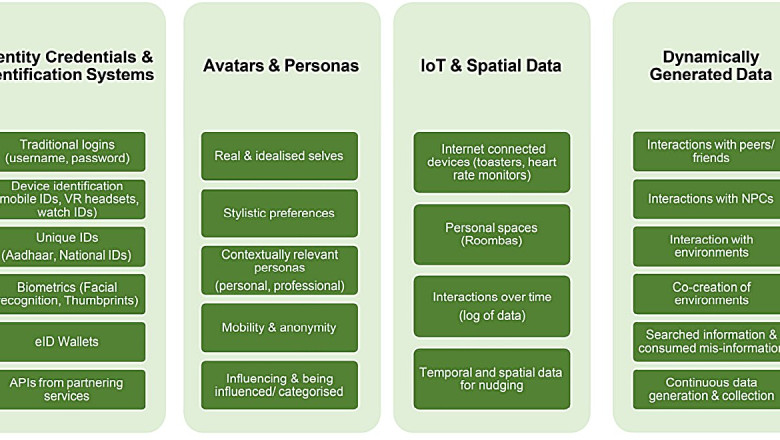
 A framework for digital identity in the metaverse. Credit: International Journal of Web Based Communities (2026). DOI: 10.1504/ijwbc.2026.154989
Research published in the International Journal of Web-Based Communities has looked at how digital identity might be governed online, specifically in the so-called metaverse. The study found that current frameworks for digital identity are ill-equipped for emerging immersive online environments, which sit under the umbrella term "metaverse." The work argues that regulators must move from a privacy-focused approach to one that is broader and rights-based.
The study finds that digital identity in the metaverse extends well beyond usernames and authentication. It encompasses avatars, digital personas, identity credentials, data collected by internet-connected sensors, and the relationships and behavioral traces created through continuous interaction in these virtual environments. The team led participatory workshops with young adults to examine three scenarios: social media influencing, extended reality (XR) workplaces, and integrated public-private health care.
In each scenario, the team found that the immersive environments blurred the lines between public and private life. They also increased "datafication," the conversion of everyday behavior into data that can be analyzed and monetized by platform operators, employers and technology providers. The researchers argue that this new concentration of power compromises user privacy and exposes them to harms for which blame cannot be readily apportioned.
There is thus an urgent need for a new approach to governance that is centered on human rights and embeds ethical considerations into technology development.
Nishant Anand et al, Beyond avatars and access: rethinking digital identity governance in the metaverse, International Journal of Web-Based Communities (2026). DOI: 10.1504/ijwbc.2026.154989
Key concepts
AI surveillance capitalism
Provided by
Inderscience
Who's behind this story?
 Lisa Lock
BA art history, MA material culture. Former museum editor, paramedic, and transplant coordinator. Editing for Science X since 2021. Full profile →
PhD nano-engineering from Delft University. Published researcher and journal reviewer. Brings scientific insight to content standards. Full profile →
Aug 5, 2026
0
Aug 5, 2026
0
Aug 6, 2026
0
Aug 5, 2026
0
Aug 6, 2026
0
5 hours ago
Aug 7, 2026
Aug 7, 2026
Aug 7, 2026
Aug 7, 2026
Aug 7, 2026
Aug 6, 2026
Aug 6, 2026
Aug 6, 2026
Aug 6, 2026
Jul 30, 2024
Feb 2, 2022
Mar 25, 2026
Dec 13, 2024
Nov 12, 2024
Apr 1, 2022
5 hours ago
Aug 7, 2026
Aug 7, 2026
Aug 7, 2026
Aug 7, 2026
Aug 7, 2026














Comments
0 comment